


A Buyer's Guide to Platform Laser Welding Machine
Aug. 13, 2026
A platform laser welding machine is an industrial laser welding system designed to provide precise, repeatable, and efficient welding across a defined working platform. Unlike handheld laser welding equipment, platform-based systems are generally built for applications that require stable workholding, controlled positioning, automated movement, and consistent welding quality.
For manufacturers evaluating laser welding technology, choosing the right platform laser welding machine requires more than comparing laser power or purchase price. We need to consider the workpiece dimensions, material, joint design, production volume, positioning accuracy, automation requirements, and long-term operating costs.
This guide explains the key specifications and purchasing factors that help buyers select a platform laser welding machine suitable for their production requirements.
What Is a Platform Laser Welding Machine?
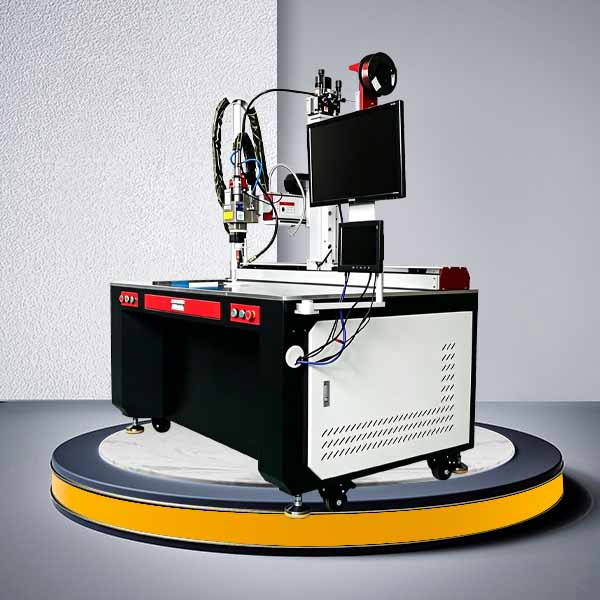
A platform laser welding machine combines a laser source, welding head, working platform, motion system, control system, and supporting components into an integrated welding solution.
The workpiece is positioned on the platform, while the laser welding head moves according to a programmed path or follows a controlled positioning system. Depending on the machine configuration, movement may be provided through linear axes, a motorized platform, robotic integration, or a combination of systems.
The fundamental objective is to deliver accurate and repeatable laser energy to the welding joint.
Platform laser welding machines are commonly considered for applications involving:
Sheet metal components
Stainless steel parts
Carbon steel assemblies
Aluminum components
Electrical and electronic components
Battery components
Automotive parts
Hardware products
Precision machinery
Metal enclosures
Custom fabricated components
The exact application range depends on the laser source, machine configuration, optics, and material requirements.
Why Choose a Platform Laser Welding Machine?
Laser welding provides several advantages compared with conventional welding technologies.
A concentrated laser beam creates a localized heat-affected zone, allowing manufacturers to produce precise welds with relatively low thermal distortion when the process is properly configured.
A platform system adds another important advantage: repeatability.
When components are consistently positioned on a stable platform and the welding path is controlled through a programmable system, manufacturers can achieve more uniform results across production batches.
Other potential benefits include:
High welding precision
Fast processing speeds
Reduced thermal distortion
Consistent weld quality
Low material deformation
Programmable welding paths
Reduced dependence on manual welding skills
Compatibility with automation
Efficient processing of repetitive components
For manufacturers producing similar parts repeatedly, these advantages can translate into improved productivity and more predictable manufacturing quality.
How Does a Platform Laser Welding Machine Work?
The laser source generates a concentrated beam of light that is directed through an optical system toward the welding area.
As the laser beam interacts with the metal surface, its energy is converted into heat. When the energy density is sufficiently high, the material melts and forms a weld pool. As the laser moves along the joint, the molten material solidifies and creates the welded connection.
The welding process is influenced by multiple parameters, including:
Laser power
Welding speed
Focus position
Beam diameter
Pulse characteristics
Shielding gas
Material thickness
Joint configuration
Surface condition
A platform laser welding machine allows these parameters to be controlled within a defined production process, helping manufacturers establish repeatable welding conditions.
Key Factors to Consider Before Buying
Selecting a platform laser welding machine should begin with the application rather than the machine specification sheet.
1. Laser Power
Laser power is one of the most visible specifications when comparing machines, but higher power does not automatically mean better performance.
Common configurations may use different power levels depending on the material and thickness being welded. Thin precision components may require considerably less power than thick metal structures.
We should first identify the maximum and typical material thickness that the machine needs to process. Then we can determine an appropriate laser power range.
Buying excessive power can increase the initial investment and operating requirements without providing meaningful benefits for thin materials.
2. Laser Source
The laser source directly affects welding performance, efficiency, maintenance, and service life.
For many metal welding applications, fiber lasers are widely considered because they offer high electro-optical efficiency, good beam quality, and relatively low maintenance requirements.
When comparing machines, buyers should evaluate:
Laser source manufacturer
Rated power
Expected service life
Beam quality
Warranty
Maintenance requirements
Availability of technical support
The laser source is one of the components where reliability can have a significant impact on the overall ownership cost.
3. Working Platform Size
The platform dimensions determine the maximum workpiece size that can be accommodated.
Before purchasing, we should measure the largest components that will be processed and consider whether fixtures, clamps, positioning equipment, or additional tooling will occupy part of the available working area.
For example, a machine with a nominally large platform may still have limited usable space after fixtures are installed.
A good purchasing decision therefore considers the effective working area, not simply the advertised platform dimensions.
4. Positioning Accuracy and Repeatability
For precision welding, positioning performance is critical.
Accuracy describes how closely the machine can reach a programmed position, while repeatability describes how consistently it can return to that position.
These characteristics become increasingly important when welding:
Small components
Fine seams
Complex geometries
Repetitive production parts
Components with tight dimensional tolerances
Buyers should request actual machine specifications and understand how the manufacturer defines accuracy and repeatability.
5. Motion System
The motion system determines how the laser head and workpiece move relative to one another.
A platform laser welding machine may use linear axes, motorized tables, CNC-controlled positioning systems, or other configurations.
We should consider:
Number of controlled axes
Travel distance
Maximum movement speed
Positioning accuracy
Repeatability
Control method
Programming capability
For simple straight welds, a basic motion system may be sufficient. For complex three-dimensional components, additional axes or rotary positioning may be necessary.
6. Welding Head Quality
The welding head is another critical component.
A high-quality welding head should provide stable beam delivery, precise focusing, and reliable operation under the intended production conditions.
Depending on the application, buyers may also consider features such as:
Auto-focus capability
Protective lens monitoring
Adjustable spot size
Gas protection
Integrated sensing
Oscillation functions
The welding head should be matched to the laser source and application rather than selected independently.
7. Control System and Software
The control system determines how easily operators can configure, store, and reproduce welding programs.
A good platform laser welding machine should provide an intuitive interface while supporting the level of programming required by the production process.
Useful functions may include:
Parameter storage
Welding path programming
Recipe management
Automatic positioning
Error monitoring
Process control
Production data management
For manufacturers producing multiple product models, convenient recipe management can significantly reduce setup time.
8. Workholding and Fixtures
Fixtures are often overlooked during machine purchasing, yet they can have a major effect on welding quality.
The purpose of a fixture is to hold the workpiece in a stable and repeatable position throughout the welding process.
Poor workholding can lead to:
Misalignment
Inconsistent weld positioning
Excessive gaps
Component movement
Dimensional variation
For repetitive production, custom fixtures may be worth considering. A well-designed fixture can improve both welding consistency and production efficiency.
Materials Suitable for Platform Laser Welding
Platform laser welding machines can be configured for a variety of metals.
Stainless Steel
Stainless steel is commonly processed because laser welding can produce narrow, precise welds with relatively low distortion.
Carbon Steel
Carbon steel components can also be laser welded efficiently when appropriate parameters and shielding conditions are established.
Aluminum
Aluminum presents greater process sensitivity because of its reflectivity and thermal characteristics. The laser source, power level, joint design, and process parameters must therefore be selected carefully.
Copper and Other Reflective Metals
Highly reflective materials can require specialized laser configurations and process optimization. Buyers should confirm that the proposed machine has been tested for the specific material before purchasing.
Automation Considerations
Not every manufacturer needs a fully automated system.
For low-volume or highly variable production, a manually loaded platform machine may offer a better balance between investment and flexibility.
For high-volume production, however, automation can significantly improve throughput.
Potential automation options include:
Automatic loading and unloading
Robotic handling
Conveyor integration
Vision positioning
Automatic fixtures
Rotary tables
Multi-station worktables
Production-line integration
The right approach depends on production volume, labor availability, product variation, and required cycle time.
Safety Features to Evaluate
Laser welding equipment requires appropriate safety controls because industrial laser systems can present serious hazards.
When comparing machines, buyers should evaluate the overall safety architecture, including:
Protective enclosure
Interlocked doors
Emergency stop systems
Laser emission controls
Protective viewing arrangements
Warning indicators
Fume extraction
Electrical protection
Safety features should comply with the applicable requirements for the country and facility where the machine will be installed.
Maintenance and Operating Costs
The purchase price is only one part of the total cost of ownership.
We should also evaluate:
Electricity consumption
Cooling requirements
Protective lens replacement
Nozzle replacement
Laser source maintenance
Welding gas consumption
Service costs
Spare-part availability
Software support
A machine with a lower initial price may not necessarily provide the lowest long-term cost.
Reliable technical support is particularly important for industrial equipment. Fast access to replacement parts, troubleshooting, and process assistance can reduce unexpected production downtime.
Platform Laser Welding Machine Price
The price of a platform laser welding machine depends on configuration rather than laser power alone.
Factors affecting the total investment can include:
Laser power
Laser source
Platform dimensions
Number of motion axes
Welding head
CNC system
Automation level
Fixture design
Safety enclosure
Cooling system
Vision system
Customized functions
For this reason, buyers should compare complete machine configurations rather than comparing headline prices between machines with different specifications.
Questions to Ask a Laser Welding Machine Supplier
Before placing an order, we recommend asking the supplier several practical questions:
What materials and thicknesses has this machine been tested on?
What laser source is installed?
What is the effective working area?
What are the positioning accuracy and repeatability?
What motion system is included?
Can customized fixtures be provided?
What welding head is used?
What safety systems are included?
What is the expected delivery time?
What warranty is provided?
Is operator training included?
How are spare parts supplied?
What technical support is available after installation?
Can sample welding tests be performed before purchase?
A supplier that can provide sample welds using the buyer's actual materials and components can offer considerably more useful information than a specification sheet alone.
Final Checklist for Buying a Platform Laser Welding Machine
Before making the final purchasing decision, we should confirm:
Material compatibility
Maximum material thickness
Required laser power
Laser source reliability
Working platform dimensions
Positioning accuracy
Motion-axis configuration
Welding head specifications
Fixture requirements
Software functionality
Automation requirements
Safety configuration
Cooling system
Maintenance requirements
Spare-parts availability
Warranty and technical support
Total cost of ownership
Conclusion
Choosing the right platform laser welding machine requires a comprehensive evaluation of the production process rather than focusing on a single specification. Laser power, platform size, motion accuracy, welding head, control system, fixtures, automation, safety, and after-sales support all contribute to the machine's practical value.
For precision and repetitive manufacturing, a properly configured platform laser welding machine can provide high welding consistency, precise positioning, reduced thermal distortion, and improved production efficiency.
61
0
0
All Comments (0)
Previous: Effektive løsninger til rengøring af silikonskiver
Next: How Does Laser Scribing Enhance Precision in Manufacturing?
If you are interested in sending in a Guest Blogger Submission,welcome to write for us!

Comments